ABOUT

Hi, I'm Brenna. As a creative brand leader, I specialize in integrating strategy, positioning, AI, and consumer psychology into effective systems that deliver measurable outcomes.
My work goes beyond surface-level campaigns and channel tactics. I develop the strategic infrastructure that connects brand to sustainable growth, delivering up to 800% more engagement and 1400% ROI.
I spent the first half of my career shaping visual communication within agency creative departments before moving in-house to lead brand and marketing as a de facto CMO/CBO. My experience on both sides of the house gives me a comprehensive understanding of how to bridge gaps between agency and client. I know how to develop strategies and positioning that drive performance through creative, and how to execute systems without the friction, dilution, and loss of momentum that typically happen during handoffs.
My path into brand leadership was driven by continuous curiosity and a steady evolution. I began my career in ad agency creative departments after earning my BFA in Advertising Design from the Academy of Art University, where I developed a rigorous foundation in brand strategy and visual communication. A commitment to deeper exploration led me to transition from agency life to independent consulting on progressively complex projects for clients and eventually directing their annual brand plans and marketing budgets.
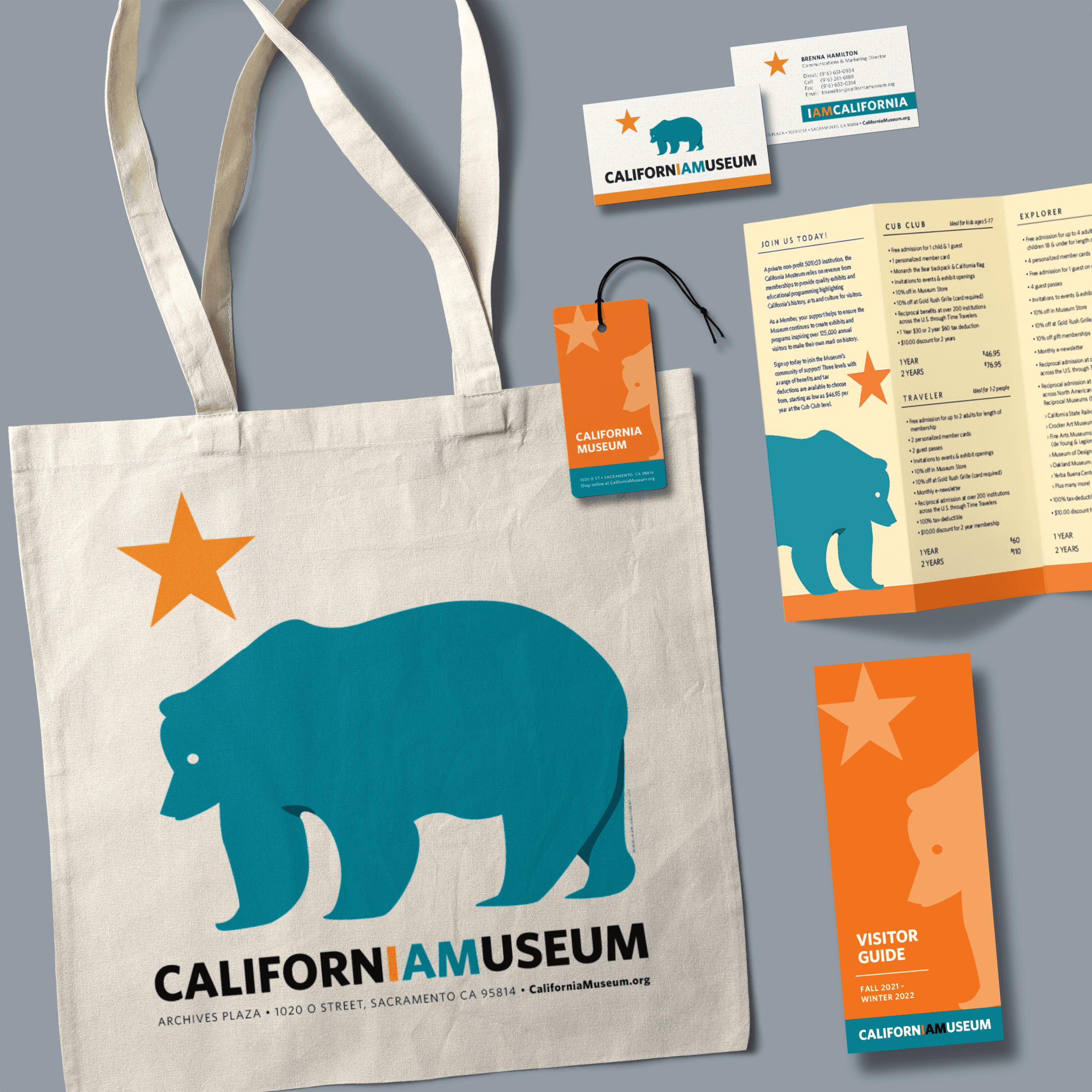
While freelancing, I accepted a three-month contract at the California Museum that ultimately evolved into a decade-long leadership role that reshaped my practice entirely. Working within the Museum's mission to inspire Californians through history, arts, and culture gave me the bandwidth to design and pressure-test brand frameworks at a systems level while unifying story, experience, and audience impact. The governance models and strategic principles I refined during my tenure continue to guide every enterprise engagement I lead today.
RECOGNITION & CERTIFICATIONS
Top 25 Portfolios of Creative & Design Leaders
— Marissa Louie, Lead Designer at Apple, Expedia, & SiriusXM
Artificial Intelligence in Marketing Certified
Top 10% of Cohort; Recommended by former Google Chief Evangelist
LevelC Brand Architecture Certified
Led by Marty Neumeier, author of "The Brand Flip," "The Brand Gap," & "Zag"
7 principles that guide my brand leadership:
1. Brand-led marketing drives relevance, relationships, & ROI.
I align strategy and execution across advertising, marketing, and PR to build relevance with audiences, strengthen lasting relationships, and compound into measurable returns.
2. Alignment is a strategic discipline.
I eliminate silos and create shared clarity that accelerates decision-making, reduces friction, and enables unified execution across teams.
3. Purpose works only when it becomes action.
I connect brand values to data-informed storytelling that turns intention into attention and motivates audiences to engage, purchase, and stay loyal.
4. Craft scales when strengthened by technology.
I combine classic brand strategy with AI and digital innovation to deliver creative and operational excellence across brand systems.
5. Constraint turns lean resources into outsized ROI.
I prioritize impact, turning limited budgets into disproportionate returns, including building a donor media program that transformed $20K into $300K in campaign value, delivering 1400% ROI.
6. Co-creation results in better solutions and stronger results.
Collaborative processes accelerate adoption, improve alignment, and generate work that moves KPIs and organizational culture forward.
7. Diversity expands commercial opportunity.
With the U.S. projected to reach a non-white majority by 2045, building inclusive brands is a competitive advantage that unlocks market expansion and new revenue while preparing businesses for the shift ahead.
SELECT CLIENTS & PARTNERS
Arts & Culture
California Museum
Charles M. Schulz Museum
Film Noir Foundation
Eames Office
Eames Institute of Curiosity
Skirball Cultural Center
Smithsonian Institution
Consumer
Black Angus Steakhouse
E&J Gallo
Go Girl/Nor-Cal Beverage
Redwood Creek Vineyards
Shoei Foods, USA
Pottery World Home Décor
Tower Records
Enterprise & Public Sector
Coit Services, Inc.
Dine Marketing
Maloof Sports & Entertainment
Mercedes-Benz USA
Milgard Windows
Offices of Governor Gavin Newsom & First Partner Jennifer Siebel Newsom